
Supreme Court Texas Redistricting Ruling: What the Decision Means for 2026 Elections
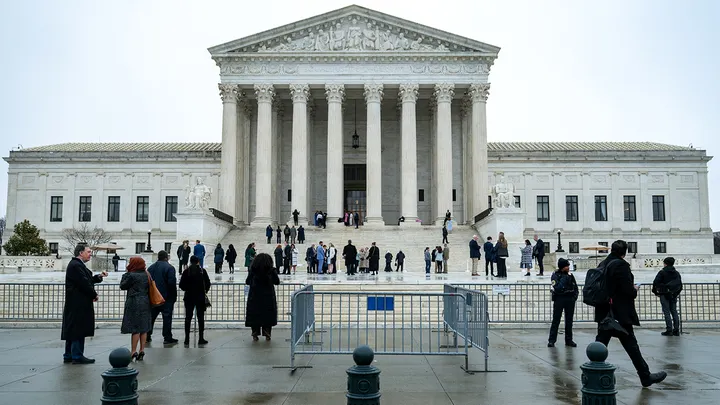
The Supreme Court Texas redistricting ruling has become one of the most important election-law developments heading into the 2026 elections. The decision affects congressional dist...
On this page Table of Contents 15 sections
- 1 Quick Answer: What Did the Supreme Court Decide?
- 2 What Is Redistricting?
- 3 Why the Texas Map Became So Controversial
- 4 Why This Ruling Matters for 2026
- 5 The Legal Issue: Race vs. Politics
- 6 What Republicans Are Saying
- 7 What Democrats and Civil-Rights Groups Are Saying
- 8 How This Could Affect Texas Voters
- 9 How This Could Affect Candidates
- 10 Why the Ruling Has National Importance
- 11 What Makes Mid-Decade Redistricting Different?
- 12 Does This End the Legal Debate?
- 13 What Should Voters Watch Next?
- 14 Why This Ruling Is Bigger Than Texas
- 15 Conclusion
The Supreme Court Texas redistricting ruling has become one of the most important election-law developments heading into the 2026 elections. The decision affects congressional districts, party strategy, voting-rights arguments, and the balance of power in the U.S. House.
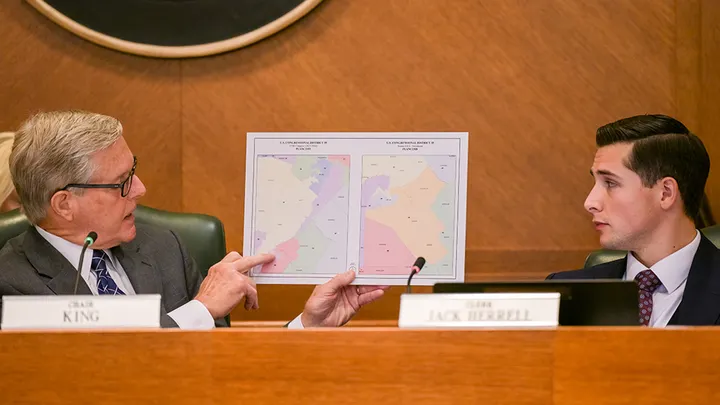
At the center of the issue is Texas’s newly redrawn congressional map. Republican leaders supported the map, arguing that the state had the authority to redraw districts and that the plan reflected legal political considerations. Civil-rights groups challenged it, arguing that the map weakened the voting strength of minority communities and crossed the line into unconstitutional racial gerrymandering.
The Supreme Court has now allowed Texas to move forward with the GOP-favored congressional map for the 2026 election cycle, reversing the lower-court ruling that had blocked the map. The decision followed earlier emergency action by the Court that let the map remain in place while the legal fight continued.
Quick Answer: What Did the Supreme Court Decide?
The Supreme Court’s ruling means Texas can use its new congressional redistricting map in the 2026 elections. A lower federal court had found that the map was likely an unconstitutional racial gerrymander, but the Supreme Court reversed that decision and allowed the state’s map to stand.
In simple words: Texas Republicans won a major redistricting victory, and the 2026 congressional races in Texas will likely be held under the new GOP-favored map.
What Is Redistricting?
Redistricting is the process of redrawing political district boundaries. These boundaries decide which voters are grouped together to elect representatives.
Normally, states redraw congressional maps after the U.S. Census, which happens every 10 years. But sometimes, states attempt mid-decade redistricting, meaning they redraw maps before the next census cycle.
That is what made the Texas redistricting fight especially controversial. Texas moved to redraw congressional lines before the next census, and the new map was expected to benefit Republican candidates.
Why the Texas Map Became So Controversial
The Texas redistricting map became controversial because critics argued it was designed not only to help Republicans politically, but also to reduce the influence of minority voters.
Civil-rights groups, including the League of United Latin American Citizens, challenged the map. Their argument was that Texas relied too heavily on race when drawing district lines and diluted the voting power of Latino and Black voters.
A lower federal court agreed with challengers enough to block the map, saying it was likely unconstitutional. But Texas appealed, and the Supreme Court stepped in.
The Supreme Court’s earlier order said the lower court had failed to properly respect the presumption of legislative good faith and had disrupted an active election process.
Why This Ruling Matters for 2026
The ruling matters because congressional maps directly affect who has a realistic chance of winning House seats.
A district boundary can decide whether an area leans Republican, Democratic, or competitive. Even small changes can shift thousands of voters from one district to another.
The Texas map is widely described as favorable to Republicans and could help the GOP gain as many as five additional U.S. House seats in the 2026 midterms.
That matters nationally because control of the U.S. House often depends on a small number of seats. If one state’s map creates several safer seats for one party, it can change campaign strategy across the country.
The Legal Issue: Race vs. Politics
One of the biggest questions in redistricting law is the difference between racial gerrymandering and partisan gerrymandering.
Partisan gerrymandering happens when lawmakers draw maps to benefit one political party.
Racial gerrymandering happens when race is the main factor used to draw district lines in a way that violates constitutional protections.
The Supreme Court has generally treated partisan gerrymandering claims differently from racial gerrymandering claims. Partisan map-drawing may be politically controversial, but racial gerrymandering can violate the Constitution if race predominates without a strong legal justification.
Texas argued that the map was political, not racial. Challengers argued the state used race as a tool to shape political results.
That distinction became central to the case.
What Republicans Are Saying
Republicans see the ruling as a major legal and political victory. From their perspective, Texas had the authority to draw congressional districts and defend its map against what they viewed as an overreaching lower-court decision.
Supporters of the map argue that states should have flexibility in election administration and that courts should be careful about changing maps close to elections.
This is where the Purcell principle often comes into play. Courts are generally cautious about changing election rules close to an election because late changes can confuse voters, candidates, and election officials.
The Supreme Court’s December order emphasized election disruption concerns, noting that the lower court’s injunction came during an active campaign period.
What Democrats and Civil-Rights Groups Are Saying
Democrats and voting-rights advocates strongly criticized the outcome. They argue that the map weakens minority representation and gives Republicans an unfair advantage.
Their concern is not only about one election cycle. It is also about long-term representation. If minority communities are split across districts or packed into fewer districts, their ability to elect preferred candidates can be reduced.
Critics also say this ruling could encourage more aggressive mid-decade redistricting in other states.
Several civil-rights and voting-rights organizations have framed the case as part of a larger national fight over fair representation, racial discrimination, and political power.
How This Could Affect Texas Voters
For Texas voters, the ruling means many people may vote under different congressional district lines than before.
A voter’s district can affect:
who appears on the ballot,
which congressional race they vote in,
which communities are grouped together,
and whether their district is competitive or safely controlled by one party.
Most voters do not think about district lines every day, but redistricting can shape political outcomes before a single vote is cast.
That is why redistricting cases are so important. They do not just decide maps. They decide political opportunity.
How This Could Affect Candidates
Candidates also have to adjust quickly when maps change.
A new district can create new campaign challenges. Candidates may need to introduce themselves to new voters, raise more money, change messaging, or even decide whether to run in a different district.
In some cases, redistricting can place two incumbents into the same district. In other cases, it can turn a competitive seat into a safer one for one party.
The Texas map could reshape campaign strategy for both Republicans and Democrats in 2026.
Why the Ruling Has National Importance
The Texas case is not happening in isolation. Redistricting fights are spreading across the country as both parties look for advantages before the 2026 midterms.
Other states, including Virginia and Florida, have also been involved in major redistricting debates or legal fights.
This creates a larger national pattern: states are using maps as a political weapon before the midterms.
If Republicans gain seats through Texas and other GOP-led states, Democrats may look for gains in states they control. This back-and-forth can create a redistricting arms race.
What Makes Mid-Decade Redistricting Different?
Most Americans expect redistricting after the census. Mid-decade redistricting is different because it happens between census cycles.
Supporters say states may have legal or political reasons to redraw maps before the next census.
Critics say mid-decade redistricting can make elections less stable and more partisan. It may also make voters feel like politicians are choosing their voters instead of voters choosing their politicians.
The Texas case adds fuel to that debate.
Does This End the Legal Debate?
The Supreme Court ruling is a major decision for the 2026 cycle, but it does not end the national debate over redistricting.
Future cases may continue to challenge how states draw maps, especially where race, party control, and voting rights overlap.
The Court’s handling of Texas also signals how difficult it can be for challengers to stop a map close to an election. Even when a lower court finds serious concerns, the Supreme Court may hesitate to disrupt election administration once campaigns are underway.
What Should Voters Watch Next?
Voters should watch three things.
First, they should check whether their congressional district has changed. A new map can move voters into a different district even if they have not moved homes.
Second, they should watch candidate filings. Redistricting can change who runs and where they run.
Third, they should follow other state redistricting cases. Texas may be one of the biggest examples, but it is not the only state where maps could affect the 2026 balance of power.
Why This Ruling Is Bigger Than Texas
This ruling is about Texas, but its impact reaches far beyond the state.
It shows how courts, legislatures, and political parties are fighting over the structure of future elections. It also shows how redistricting can become one of the most powerful tools in American politics.
For Republicans, the decision strengthens their 2026 House strategy.
For Democrats and civil-rights groups, it raises serious concerns about minority voting power and fair representation.
For voters, it is a reminder that election results are shaped not only by candidates and campaigns, but also by the lines on the map.
Conclusion
The Supreme Court Texas redistricting ruling is a major turning point before the 2026 elections. By allowing Texas to use its GOP-favored congressional map, the Court has given Republicans a significant advantage in one of the country’s most politically important states.
The decision also deepens the national debate over redistricting, racial gerrymandering, partisan power, and voting rights.
The simple takeaway is this: the Texas map will likely shape congressional control in 2026, and the ruling may encourage more states to fight over district lines before the midterms.
For voters, candidates, and political observers, this is not just a legal story. It is a story about representation, power, and the future direction of Congress.
For more legal updates, contact us now
Need help with a family law matter?
Talk to WeCan Legal APC — free, confidential, no obligation.
Frequently Asked Questions
1. What is the Supreme Court Texas redistricting ruling about? +
The ruling is about whether Texas can use its newly redrawn congressional map for the 2026 elections. The Supreme Court allowed the map to move forward after a lower court had blocked it.
2. Why did the lower court block the Texas map? +
The lower court found that the map was likely an unconstitutional racial gerrymander. Challengers argued that the map weakened the voting power of minority communities.
3. How does the ruling affect the 2026 elections? +
The ruling allows Texas to use a GOP-favored congressional map in 2026. That could help Republicans gain additional U.S. House seats.
4. Is redistricting always illegal? +
No. Redistricting is a normal legal process. It becomes legally controversial when challengers argue that maps violate the Constitution or the Voting Rights Act, especially through racial discrimination or vote dilution.
5. Why is the Texas redistricting case important nationally? +
The case matters nationally because control of the U.S. House may depend on a small number of seats. Texas’s map could affect that balance and encourage other states to pursue their own redistricting strategies.